



On Tuesday, the Boulder Valley School District (BVSD) is set to make a final decision on a proposal that would impact a total of 16 schools, closing four schools and consolidating or relocating others.
See the full story from Sophia Villalba in the video below
“We were completely shocked to see Douglass Elementary on the proposal for closure,” BVSD parent Erin Pommer said.
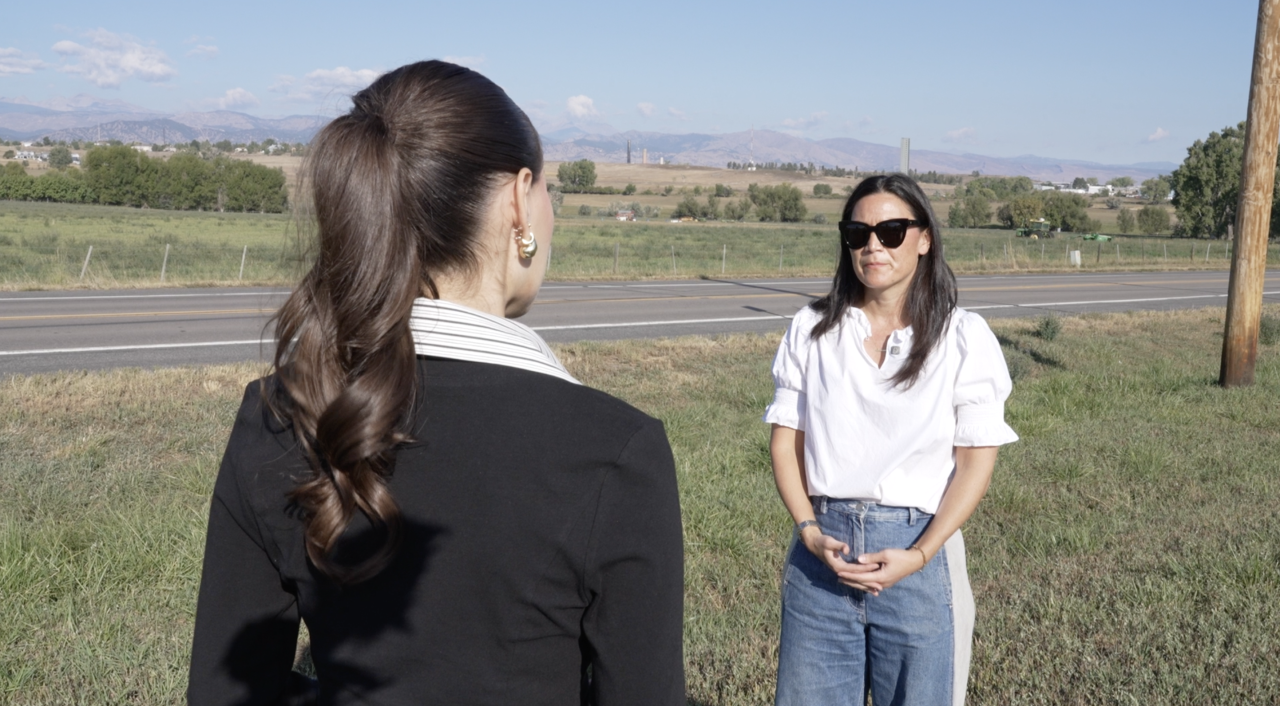
Denver7 has learned before the final vote happens, hundreds of parents, students, and community members are expected to gather outside of the district’s headquarters for a rally.
The Resilient Schools Proposal focuses on the Boulder, Broomfield and Louisville-Superior-area schools. District leaders said those schools had many grade levels with two or fewer classes.
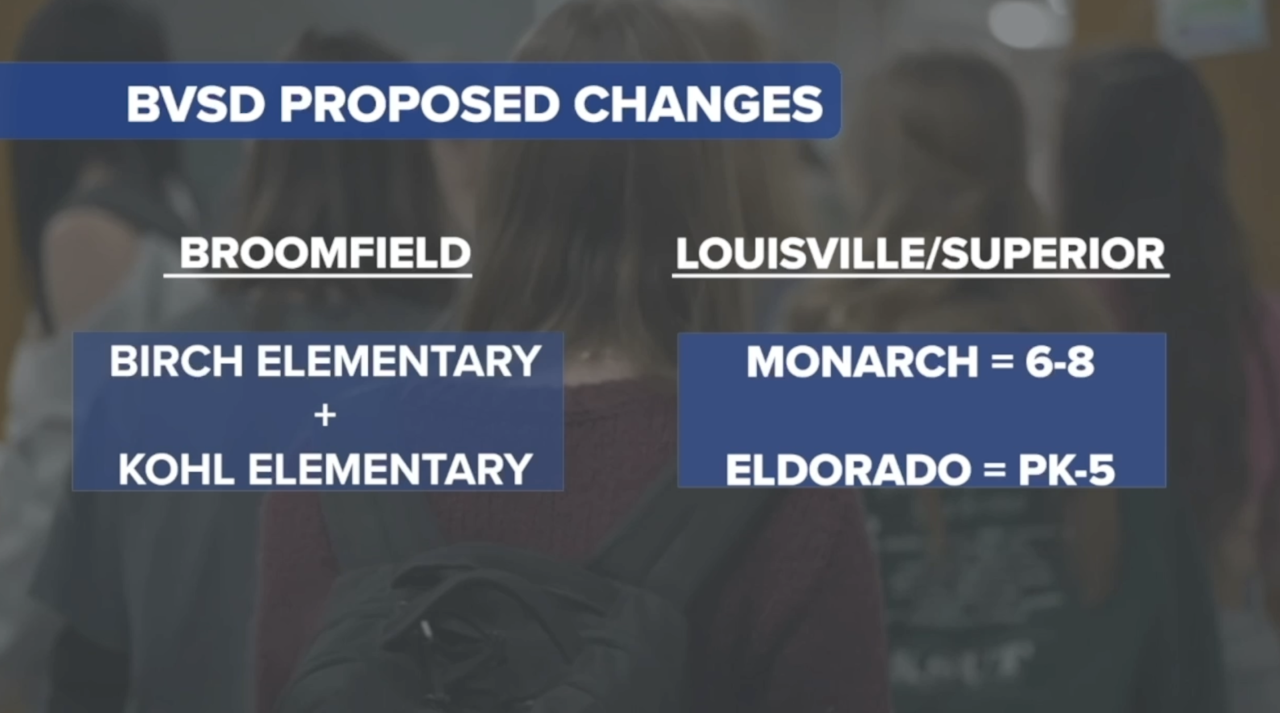
In the Broomfield area, the proposal combines Birch and Kohl elementary schools putting students in the Kohl building.
The Louisville and Superior areas will make Monarch a dedicated middle school for grades sixth through eighth and make Eldorado dedicated to pre-school and elementary school students.
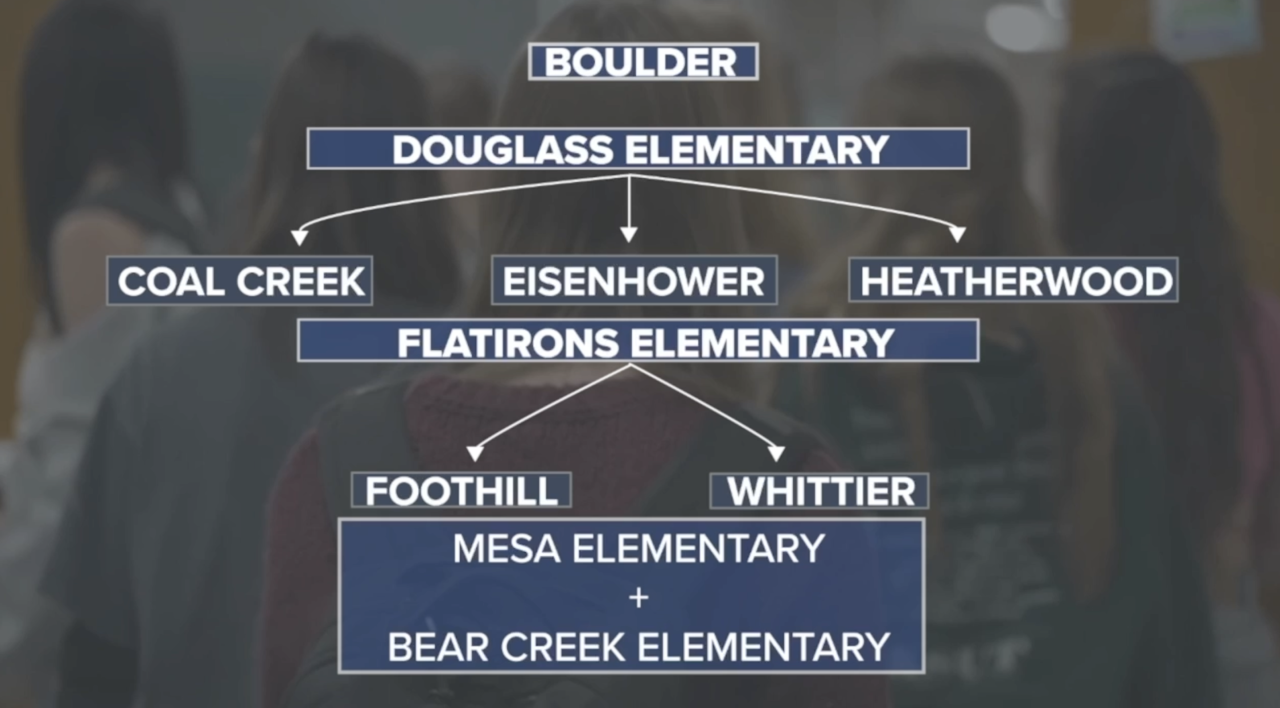
For Boulder area schools, Douglass Elementary would close, and those students would split into Coal Creek, Eisenhower and Heatherwood schools. High Peaks Elementary would take over the Douglass building.
Flatirons Elementary would also close, dividing students between Foothill and Whittier. Mesa and Bear Creek elementary schools would consolidate.
Denver7 spoke with a parent who has two kids currently attending Douglass Elementary and she said there are still so many unknowns.
“It was incredibly sad and challenging to explain that not only would their school close, but our school is going to be broken into three different zones,” Pommer said.
The Resilient Schools Proposal is projected to bump the average class number per grade level up to 2.5 by 2030 and exude excess capacity in schools by 1,906 students.
“The goal of our moves is to increase the number of rounds (classes at each grade), decreasing the symptoms of under-enrolled schools, including multi-age classrooms and lack of resources (including specialists and special teachers that are having to cover multiple small schools),” the district told Denver7. “The goal is two-full round schools – but any movement in that direction will be a positive for the student experience.”
The district said this plan is to address declining enrollment, reduce excess capacity in schools, and concentrate resources into fewer schools.
Since 2017, BVSD enrollment has dropped by 3,675 students while building numbers have remained the same. District leaders are expecting enrollment to keep dropping, losing another 1,700 by 2030.
After nearly a decade of declining enrollment, several BVSD schools are sitting below 50% capacity.
One of the schools set to close if the plan is approved is Douglass Elementary, which BVSD said has one of the lowest resident student populations within the district.
“We're curious to see where the proposal lands and gets finalized. From there we'll have to make some really quick decisions with the open enrollment period to not only understand where a lot of our community is going, but figure out childcare plans, transportation, all within that span of before winter break,” Pommer said.
BVSD said every student is guaranteed a seat in the neighborhood school in their assigned attendance area.
“Resident student population and housing stock data is less variable and more predictable than parent choice,” the district said.
Colorado law allows parents to apply to attend another school only if there is available space and programmatic capacity.
“Open enrollment is the valve that we can use to fill space in a neighborhood school once we account for resident students,” the district added.
Some parents told Denver7 they felt unheard.
“As soon as the proposal was presented, it appears that listening kind of turned off a little bit,” Pommer said.
BVSD said it understands this is difficult for so many families and emphasized the hours of community outreach work that went into the process, including over 60 hours meetings with BVSD schools’ faculty and staff, almost 20 hours of family and community engagement and several thousand survey responses.
Still some parents say the proposal is an incomplete plan.
“It doesn’t address the districtwide problem, so if they feel strongly enough that this proposal should move forward, what objective criteria can we all understand as a community for closure and consolidation moving forward,” Pommer said.
The district said when it came to deciding which schools would be impacted it considered enrollment trends, building capacity, and long-term student needs, and says more support will be given to students, families, and staff if the proposal is approved.
In terms of how the district came up with which schools would be impacted:
Mesa
- Reduces excess capacity and boosts enrollment at the receiving school to 3-rounds
- Mesa is among the lowest enrolled schools in Boulder and is projected to continue to decline. Mesa also has the second lowest number of resident students in its attendance area.
- Bear Creek and Mesa are located 0.71 miles apart; Of the two schools, Bear Creek has the larger capacity.
Birch
- There is capacity available at Kohl to hold the current and projected combined enrollment; Birch does not have the capacity to hold both schools’ resident students or enrollments
- Birch has the lowest future enrollment outlook in the region
Douglass
- Douglass’s resident student population is among the lowest in Boulder; Both its resident population and enrollment are below two classes/grade and are projected to stay at that level.
- The Douglass attendance area is large and less densely populated than other, non-mountain attendance areas.
- Closing Douglass increases the resident students for the receiving elementary schools.
Flatirons
- Flatirons has the lowest future enrollment outlook in the region
- Lowest current resident student population and second lowest projected resident student population, well below two classes per grade.
- Lowest current and projected enrollment of the Boulder schools; it is at one class/grade and 47% utilization and projected to stay there.
For students with Individualized Education Plans they will continue to receive support. The district emphasizes this is not the first time it’s moved or started new special educations programs.
“The district has developed a good system because of this experience,” BVSD said.
The board meeting starts at 5pm on Tuesday. If approved, the changes would take effect at the beginning of the 2027-2028 school year.
If approved Tuesday night, the district said money has been set aside to support the transition. This includes transition staffing, moving costs, and transitional support among others.
Additionally, BVSD has set up a liaison to support students and staff through the transition.


Denver7 is committed to making a difference in our community by standing up for what's right, listening, lending a helping hand and following through on promises. See that work in action, in the videos above.