



DENVER — Denver reported its first known human case of West Nile virus for 2026 in a resident Friday, as city health officials urged residents to take precautions to avoid becoming infected with the potentially deadly disease.
Denver Department of Public Health and Environment DDPHE officials said in a news release Monday that even though autumn season will soon fall upon us, the risk of contracting West Nile virus continues until the first frost, which typically occurs in October.
City health officials did not provide additional information about Denver’s first West Nile virus case of the year.
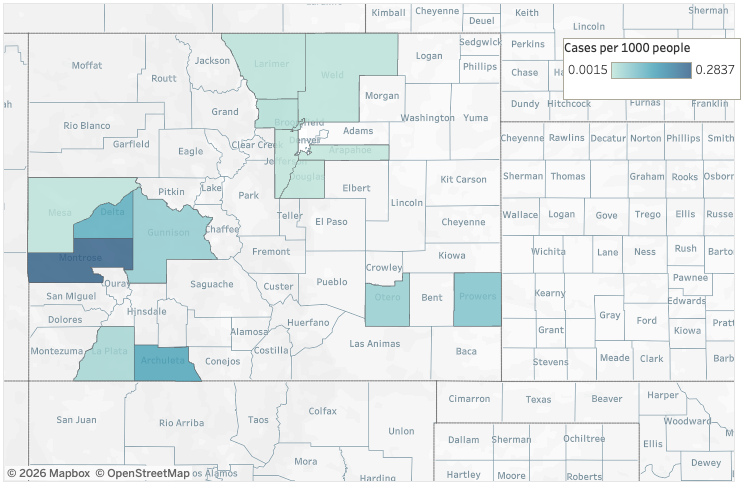
Denver’s case becomes the 41st case reported across the state this year, with other cases reported in parts of northern Colorado and the Western Slope, with Montrose residents leading the charge with about a dozen reported cases, according to the Colorado Department of Public Health and Environment.
Last year, Colorado reported 286 cases of West Nile virus spanning more than a third of the state’s counties, according to state data. Though the number of dead are no longer published on the state’s website, an analysis of the data by Denver7 shows more than 140 of those infected suffered severe disease.
While most people infected with West Nile don’t experience symptoms, people aged 55 and up, those with immunocompromised systems, or people with chronic health conditions are most at risk, according to the Colorado Department of Public Health and Environment.
Symptoms of West Nile virus infection appear two to 14 days after exposure, with 1 in 5 people developing fever, body aches, headache and occasionally skin rashes and swollen nymph nodes.
Complications can arise in about 1% of those infected, who can go on to develop a serious, sometimes fatal, neuroinvasive disease that can cause inflammation of the brain and/or meningitis, loss of vision, paralysis, coma, tremors, convulsions, and even death, according to health officials.
Experts say those severe infections will begin suddenly and can include symptoms of high fever and headache, neck stiffness, disorientation, and tremors. People should talk to their doctor or health care provider if they start to develop any of these symptoms following a mosquito bite.
Data from the state health department shows West Nile season typically begins around mid-July and peaks about a month later, but state health officials said cases can be identified as early as May and as late as December, with the state’s first freeze usually signaling the end of the season.
While there is no treatment, cure, or vaccine to protect against West Nile virus, medical professionals can treat symptoms to help patients feel better and prevent complications, according to the U.S. Centers for Disease Control and Prevention.
How to protect yourself and your family from West Nile virus
Mosquitoes are most active at dusk and dawn, so the first line of defense against potential exposure is to avoid activities during this time.
As mosquito season continues, health officials recommend taking the following steps to protect yourself and your family from West Nile virus:
- Stop mosquitoes from laying eggs in or near water on your property by:
- Eliminating sources of standing water near your home by emptying, scrubbing, turning over, covering or throwing out items that hold water such as tires, buckets, planters, toys, wheelbarrows, pools, birdbaths, flowerpots, or trash containers once a week. All of these can become a breeding ground for the mosquitoes that carry West Nile virus
- Check for water-holding containers both indoors and outdoors
- Avoid watering cement or on the street, as these can result in pools that support larval mosquitoes
- If making landscape decisions, consider ways to minimize overspray (of irrigation) to streets and gutters
- Wear long pants, long-sleeved shirts, and socks in areas where mosquitoes are active
- Use an insect repellent containing DEET, picaridin, oil of lemon eucalyptus, or para-menthane-diol. The EPA has a database where you can search for and find a repellent that is right for you.
In addition to eliminating sources of standing water around your home weekly, you can also mosquito-proof your home by installing or repairing screens on windows and doors, health officials said.


Denver7 is committed to making a difference in our community by standing up for what's right, listening, lending a helping hand and following through on promises. See that work in action, in the videos above.