

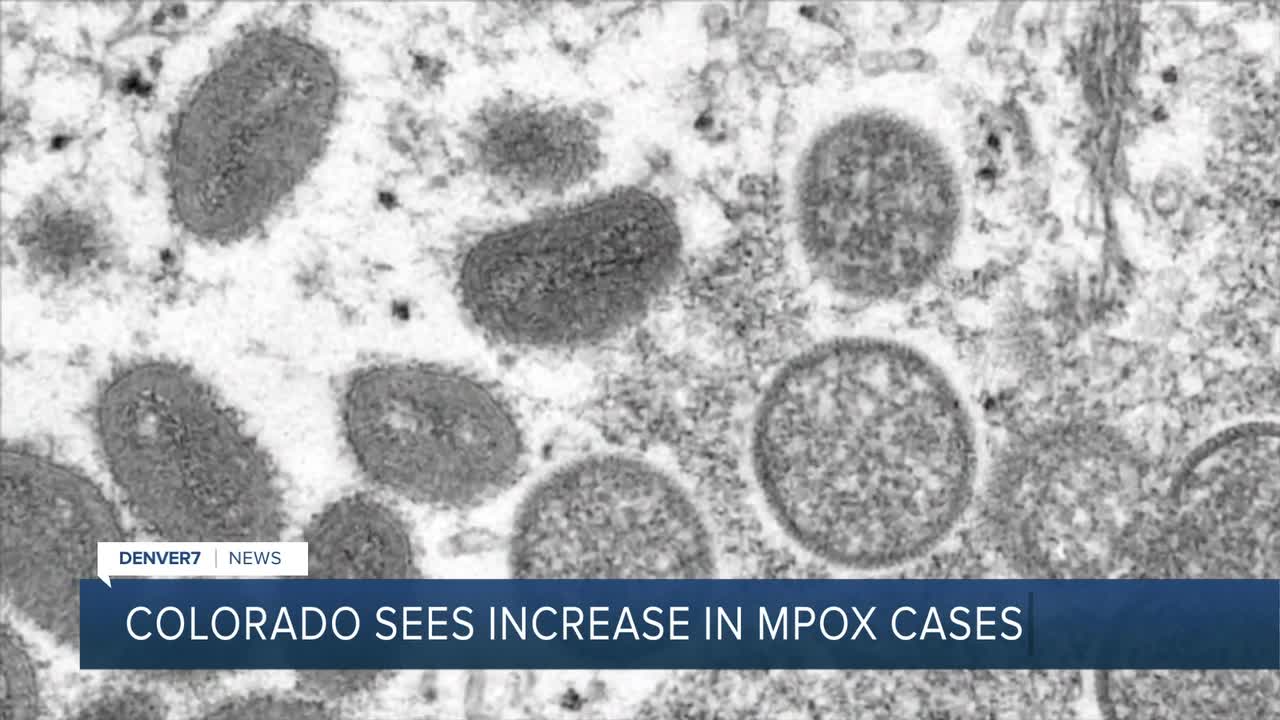


DENVER — Colorado is nearing last year's total number of Mpox cases after health officials reported a recent uptick in infections, including seven cases since late July. The Colorado Department of Public Health and Environment has recorded 18 cases this year, compared with 21 reported statewide in all of 2025.
In Denver alone, the Denver Department of Public Health and Environment (DDPHE) has seen six cases since June 1. “The recent Denver cases have no known connections or common exposures, although cases can cluster in time,” Denver Department of Public Health and Environment public information officer Ryann Money said.
DDPHE said that over the last few years, it's seen trends toward seasonal increases in spring and summer. “There are likely several factors that could contribute to an increase this time of year, like travel, which may create more opportunities for exposure and transmission,” Money told Denver7.
Mpox, formerly known as monkeypox, can cause a rash or lesions, swollen lymph nodes, fatigue and muscle aches. The virus most commonly spreads through prolonged close contact, including direct contact with infectious skin lesions.
“The rash or lesions that you would see on the skin from Mpox can last anywhere from several days to two weeks. In rare cases, even longer,” ER physician and KaufCare Advanced Urgent Care owner Noah Kaufman said.

Kaufman said summer conditions and increased social interaction can create more opportunities for transmission.
“Right now, we see a lot of sweating. It's really hot out. There's a lot of close contact, and that's really how this bug is transmitted,” Kaufman said.
State health officials said most Colorado cases this year have involved adult men, and no infections have been reported in children. The agency recommends vaccination for people who have had close contact with a confirmed case or who may be at increased risk of exposure.

